2025 in review: Data & Evidence
During 2025, the Global Obesity Observatory had several important updates and saw a continued increase in usage.
Key developments included:
- Comprehensive global data updates including obesity prevalence, obesity-related drivers and co-morbidities
- National policy updates including evidence of government obesity strategy, taxes on sugar-sweetened beverages, and obesity treatment guidelines
- Presentation maps – key maps updated, and new maps added and made available for download
- Update on Under-5s data across the Observatory
- Tables linked directly to surveys
- Expansion of cross-national survey data categories and significant update across surveys
The maintenance of the Observatory database is a continuous task, and we are always looking to improve and update the data.
Throughout 2025, the data team added monthly data and policy updates from countries and territories spanning the globe. Obesity data are presented for general prevalence, and by age, sex, region, ethnicity, education and socio-economic status. Where possible, trend data graphics have also been updated, or created, so countries can continue to monitor their national progress.
Global Obesity Observatory Statistics
Since launching the new Observatory in 2020 we have seen considerable growth in website page visits and user numbers. In 2025, while page views have plateaued at 2.3 million, we continued to see an increase in the number of users, hitting over 1 million.
The Observatory received visitors from over 230 countries or islands, with visitors from the Top 10 countries remaining almost unchanged from previous years, only the Netherlands and France being replaced by China and Singapore: USA, China, UK, Australia, Canada, India, Germany, Singapore, Malaysia & New Zealand. Our work has been reproduced around the globe but most recently in Germany, Spain, Hungary, Brazil, South Africa, Switzerland, Japan, Turkey, the USA, Mexico, and Norway.
The Rankings page continues to be the most visited page on the website with between 3-6k views per day.


This year, we have updated existing, and created several new, presentation maps on the prevalence and drivers of obesity. These include maps showing the global prevalence of breastfeeding, consumption of a range of both unhealthy and healthy foods, and mental health disorders. For the first time, we have been able to add data on the consumption of ultra-processed salty foods thanks to the surveys conducted by the Global Diet Quality Project. You can browse and download the available maps at the link below.
Data on children aged 0-5 years was updated again this year using the newly released UNICEF-WHO-The World Bank: Joint Child Malnutrition Estimates (JME).
This data is available on the Observatory for general prevalence, triple burden of malnutrition (wasting, stunting and overweight), and by region, socio-economic status and parental educational status. You can view the data on the interactive map and each individual country page, but prevalence data is now also available as a table and as a presentation map. The table can be sorted by prevalence of overweight in boys, girls, and all children, as well as filtered by region and income group.
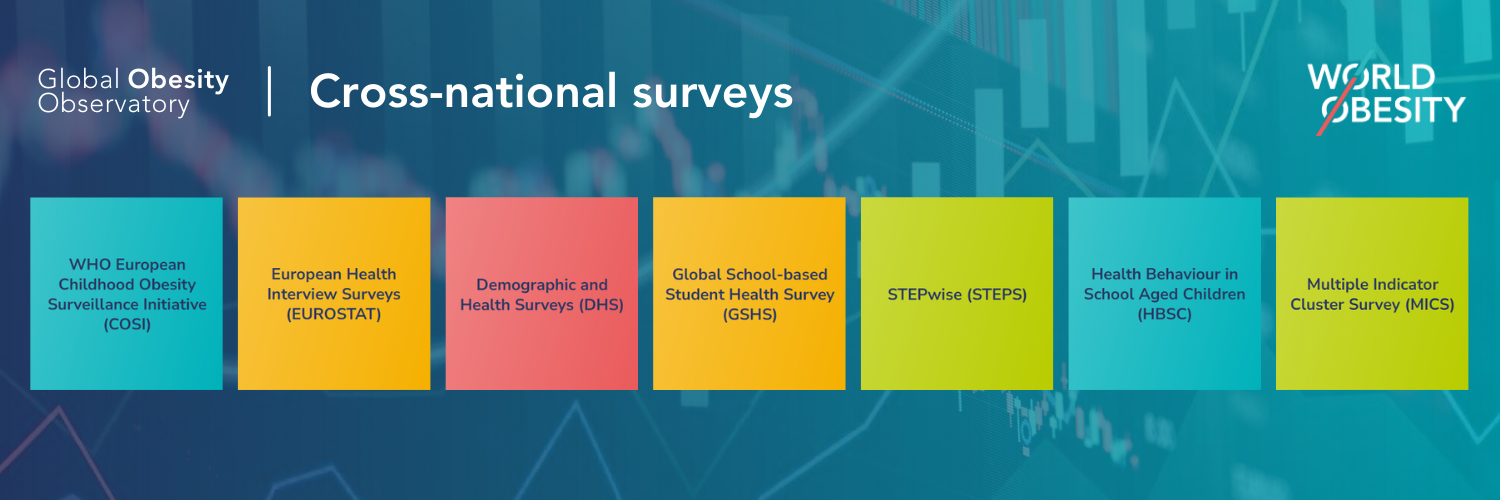
With new releases from the Childhood Obesity Surveillance Initiative (COSI), Demographic and Health Surveys (DHS), Global School-based Health Surveys (GSHS), we have significantly updated the data available on the cross-national survey pages. On this page, users can compare data from the same survey across different countries and time periods, and create and download their own charts.
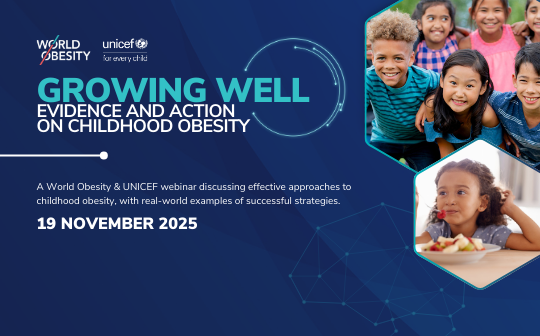
For World Children’s Day this November, World Obesity co-hosted a webinar with UNICEF discussing the multiple, complex causes of childhood obesity globally as well as effective approaches for prevention and management.
The Alternate Minister of Health of the Hellenic Republic, Eirini Agapidaki, shared the progress made in Greece on addressing childhood obesity; Ogweno Stephen, Lived Experience Trustee at World Obesity, told his own story of growing up living with obesity; Professor Pekka Puska discussed the importance of systemic, preventative policies to address the obesogenic environment.
We also heard from Mauro Brero on UNICEF’s recent Child Nutrition Report – ‘Feeding Profit: How food environments are failing children’; Senzokuhle Dlamini, a Fix My Food youth advocate from UNICEF South Africa; Santi Gómez from the Gasol Foundation; and World Obesity Past-President Louise Baur.
Visit the Observatory
Visit our Global Obesity Observatory to view all the latest global obesity data.
GLOBAL OBESITY OBSERVATORY
2025 in review: MAPPS II
The Management and Advocacy for Providers, Patients, and Systems (MAPPS) II project launched this year. This global research study is reviewing how well-equipped countries are for managing obesity in health systems. The in-depth knowledge and insight gained from this research will be able to be applied to inform policy reform and achieve global milestones - with the ultimate goal of improving access to obesity care for all.
This exciting research follows on from the first MAPPS study, which mainly focused on care and management of obesity across 68 countries. MAPPS II goes further than its predecessor and will engage actors across the system to understand the landscape of the entire system, including treatment, prevention and wider systemic and cultural factors.
Global Surveys
Three MAPPS II surveys were developed in partnership with the MAPPS II Global Working Group. In May, we launched the surveys to collect responses from key actors across the system:
- Health care professionals (available in English, Mandarin, Brazilian Portuguese and Spanish)
- Policy makers, researchers, advocacy groups and civil society (available in English, Mandarin, Brazilian Portuguese and Spanish)
- People with lived experience of obesity and their caregivers (available in English, Mandarin, Brazilian Portuguese, Spanish, French, Arabic, Hindi, isiZulu, Japanese, Korean and Malay)
So far, we’ve heard from over 1,600 people globally, sharing their professional and personal experiences with obesity in their countries.
Want your country to have stronger representation in MAPPS? The surveys are still open so please share them in your networks using our toolkit. Our Members still have the opportunity to gain early access to survey data by supporting dissemination in country.
Deep Dives
MAPPS II is doing in-depth research in six deep dive countries (Brazil, Spain, South Africa, Saudi Arabia, India and China). Beyond collecting survey data in these countries, we are hosting multi-sectoral roundtables to convene key actors in obesity prevention, treatment and management and identifying barriers, opportunities and solutions through interviews and focus groups.
In 2025, we established in-country working groups to help drive the work in country. These working groups have been vital to ensuring country relevance and buy in from key stakeholders.
In addition to the six deep dives, we are conducting further activities in the Pacific Islands. In partnership with our member organisation, The Pacific Community, one country has been selected to represent each region (Fiji, Tonga and Kiribati). In these countries, we are undertaking a targeted effort to increase survey responses, working closely with a focal point in each. In 2026-27, we will collect additional data and engage virtually with key stakeholders in each country.
2025 Roundtables
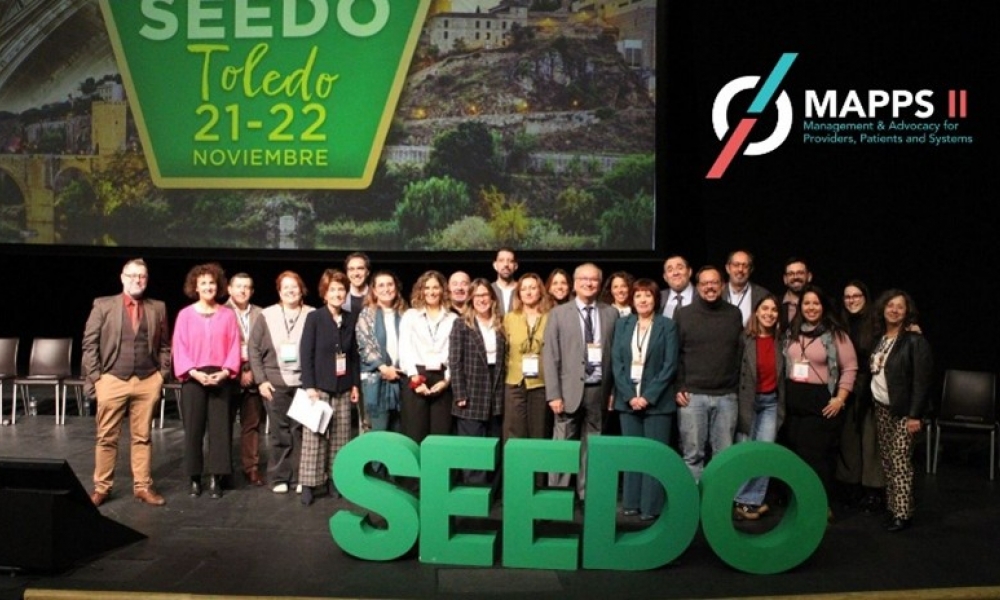
We hosted two multi-sectoral roundtables in Spain and South Africa in November.
Spain
As part of SEEDO - Sociedad Española de Obesidad’s annual congress we hosted a public round table discussion with nearly 100 observers and 18 panelists.
The session brought together experts from leading universities, medical and research institutions, civil society organisations, the World Health Organization and representatives from the Spanish government for a rich and collaborative discussion on strengthening Spain’s response to obesity.
read more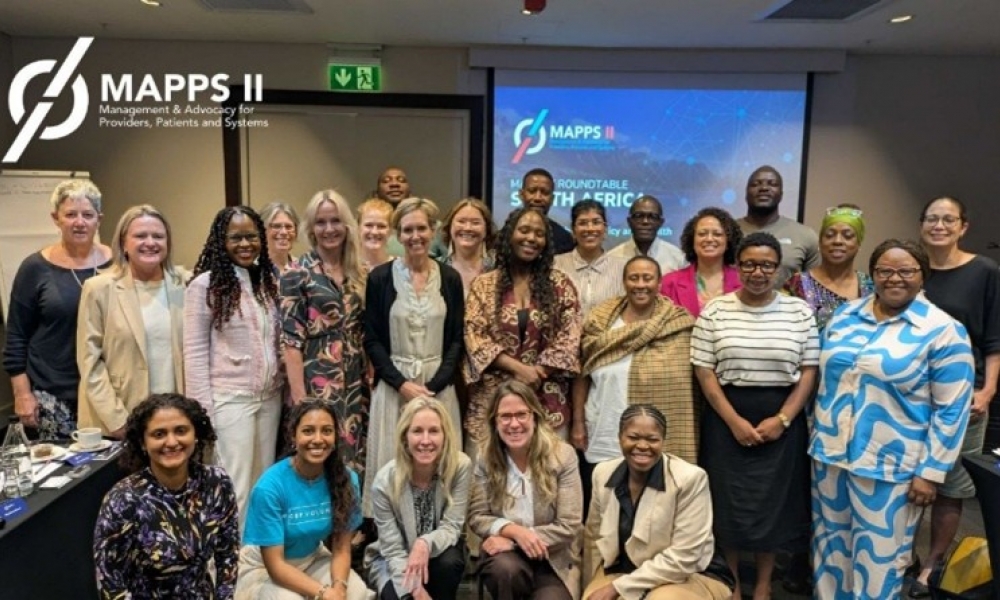
South Africa
In South Africa, the MAPPS II Roundtable brought together government leaders, researchers, civil society, UN agencies, healthcare providers and people with lived experience.
Participants had the opportunity to explore emerging MAPPS II findings, discussed barriers to effective prevention and care, and identified priority actions to strengthen South Africa’s multisectoral response to obesity.
read moreMAPPS II will continue with its important work in mapping the landscape of obesity globally. In 2026, alongside global data analysis, we will host four more in country round tables in Saudi Arabia, India, Brazil and China.
To get involved with MAPPS II and stay up to date, follow the links below.




Related News
View all
News Dec 12, 25
2025 Year-end letter from our President and CEO
Our President, Simón Barquera, and CEO, Johanna Ralston, reflect on a year full of events and milestones in obesity.
Read Post
News SCOPE Dec 12, 25
2025 in review: SCOPE
SCOPE has had an exceptional year in 2025, continuing its mission to provide world-class education in obesity management
Read Post
News Dec 12, 25
2025 in review: Journals
In 2025, our four scientific, peer-reviewed journals continued to thrive
Read Post
News Policy & Advocacy Dec 12, 25
2025 in review: Policy & Advocacy
2025 was a critical year of global momentum and driving the conversation on obesity.
Read Post
Events News Dec 12, 25
2025 in review: Events
This year we hosted interactive, powerful events, advancing knowledge and supporting action on obesity
Read Post
News Member news Dec 12, 25
2025 in review: Our Members
Membership continued to grow in 2025, and we welcomed three new Trustees to our Board.
Read Post