Multisectoral workshop on obesity in China brings together key experts from across the system
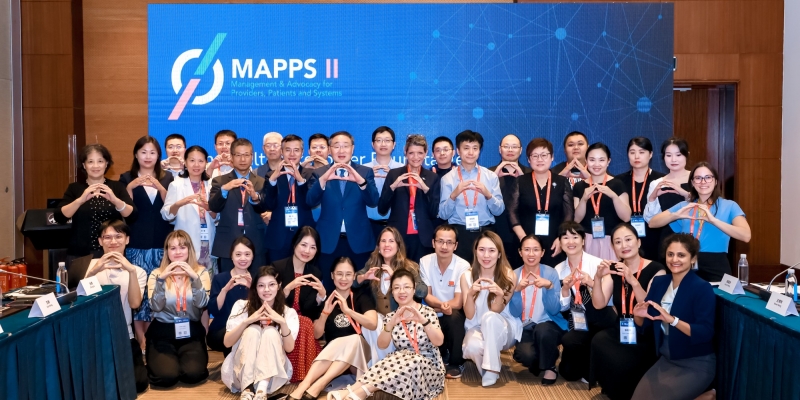
On 7 August, the World Obesity Federation, alongside our Members, the China Obesity Federation (COF) and the Obesity Prevention and Control Section of the Chinese Nutrition Society (OPCS-CNS), took part in a multisectoral workshop as part of the China Obesity Congress 2026, bringing together perspectives from healthcare, research, policy, public health, and lived experience.
World Obesity’s participation in this workshop formed a central part of MAPPS II (Management and Advocacy for Providers, Patients and Systems), a multi-country initiative led by the World Obesity Federation that combines research and multi-stakeholder engagement to generate country-level insight and bring stakeholders together around how obesity is addressed across systems. China was selected as a ‘deep dive’ country for MAPPS II, where more in-depth, collaborative work is underway with the support of key stakeholders in the country.
Context
Obesity in China has been rising across all age groups. Without effective intervention, a recent study projects that the prevalence will continue to rise, with associated medical costs reaching RMB 420 billion by 2030, accounting for 22% of total national health expenditure.
In 2019, the Chinese Government launched the Healthy China 2030 initiative, a comprehensive public health strategy which officially put health at the centre of all public policy-making, highlighting the importance of health as a precondition for economic and social development. In 2025, an anti-obesity drive was added to this initiative in an effort to slow the rising trend of obesity.
In 2024, the Weight Management Years campaign was jointly issued by 16 Chinese departments and organisations, including the National Health Commission (NHC) and the ministries of education and civil affairs. This outlined a series of measures to be taken to ensure that a supportive environment for weight management is formed in China, through significant progress in public awareness, techniques in weight management, and healthy lifestyles.
China is acting on obesity through the implementation of numerous policies, campaigns and initiatives. Positive action so far has included improved nutrition labelling, with the addition of sugar and saturated fat to mandatory labelling requirements to be introduced from March 2027.
Convening Experts
The workshop convened more than 30 experts, including participants from the Chinese Center for Disease Control and Prevention, National Center for Health Education of China, Tongzhou Health Commission, Peking University People’s Hospital, Peking Union Medical College Hospital, Beijing Children’s Hospital, Beijing Friendship Hospital, Peking University Third Hospital, Peking University Sixth Hospital, First Affiliated Hospital of Xi’an Jiaotong University, West China Second University Hospital, Fuwai Center for Healthy Lifestyle Medicine, Peking University, Xi’an-Jiaotong University, Xi’an Jiatong-Liverpool University, Xi’an Physical Education University, Huazhong University of Science and Technology, UNICEF China, Global Health Advocacy Initiative, People’s Daily Online, as well as people with lived experience of obesity and caregivers of children living with obesity.


"[Obesity’s] resolution requires efforts from all sides - policy support at the government level, collaboration across relevant specialities, and full societal awareness and active engagement" Zhongtao Zhang, Beijing Friendship Hospital, Capital Medical University
Key themes and priorities identified
The workshop surfaced a set of interconnected priorities that cut across individual, interpersonal, community, and systems levels, reflecting the complexity of obesity as a clinical and public health challenge in China.
The following themes emerged from the discussion:

Recognising the complexity of obesity and the need for cross-sectoral collaboration
A core theme throughout the workshop was the need to look beyond individual behaviour to the biological, environmental, societal, and cultural factors which shape health. In China, participants noted that obesity is still frequently attributed to personal choice or lack of willpower, and often intervention approaches are overly narrow.
Instead, it was felt that achieving measurable progress in obesity prevention and care will require strong leadership and cross-sectoral coordination, improved public awareness and professional capacity, as well as adequate resources, sustainable financing mechanisms and institutional support. This requires coordinated action, with a need to break down institutional barriers and establish a mechanism for regular collaborative governance. Additionally, there is a need to strengthen inter-departmental collaboration, clarify responsibilities and authorities, and better enable higher-level leadership to take the lead in integrating the efforts of relevant departments to promote the weight loss initiative.
“Obesity is a systemic social project that cannot be accomplished by the health department alone”
Meng Zhang, Tongzhou Health Commission
“The next step is not to build more clinics, but to truly connect resources- from population-level prevention, to early identification, risk stratification, proper management, and long-term follow-up and complication prevention. In other words, to expand one clinic into a service network”
Zhenping Zhao, Chinese Center for Disease Control and Prevention
Taking a life course approach to action on obesity
Participants noted the importance of addressing the early developmental origins of obesity. It is now widely recognised that risk factors for obesity can be present from the preconception period, making early intervention during pregnancy essential to break intergenerational transmission. Despite this, current clinical trial populations are predominantly over 50 years of age, with limited evidence for younger age groups. There is a need to include a wide range of life stages and age groups to provide corresponding evidence for effective interventions.
Each stage of the life course has different critical windows and stakeholders, requiring specific strategies. For example, ensuring that guidelines for weight loss still ensure growing children get enough protein, or paying special attention to the co-occurence of obesity and sarcopenia in the elderly population. Participants advocated for a family-centred co-prevention and co-management model, with schools playing a key role through health education, balanced meals, and active living programmes that ripple out to families and communities.
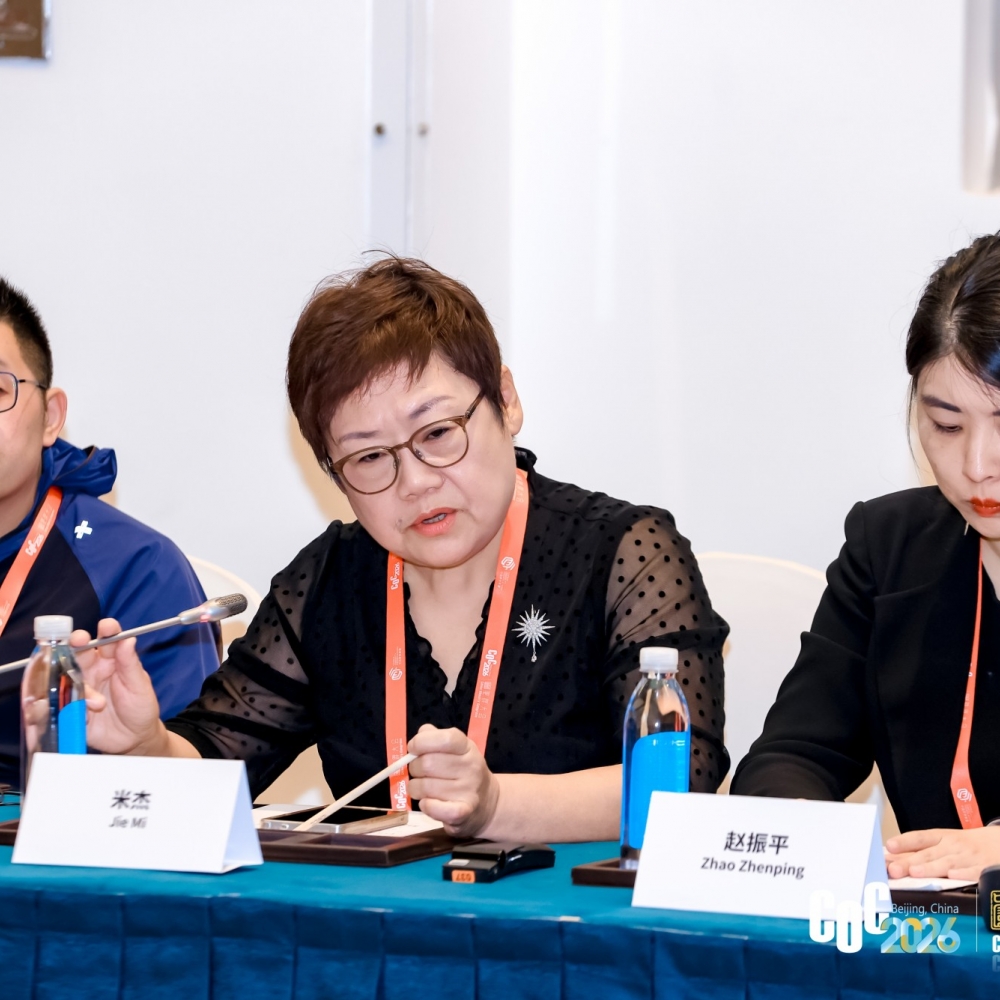
“Adopting a life course strategy for obesity control places life-stage-specific early intervention at the core, with pregnancy, early childhood and adolescence serving as irreplaceable critical windows to curb obesity and related chronic diseases in China. Preventive interventions starting from gestational weight management can effectively block the intergenerational transmission of obesity, far more cost-effective than treating established obesity in adulthood. We should integrate early-life obesity prevention into routine maternal, child and adolescent healthcare systems to consolidate long-term metabolic health across the whole lifespan.”
Mi Jie, Beijing Children's Hospital, Capital Medical University
Read More
Creating healthier food environments and improving nutrition literacy
Social and cultural norms and intergenerational beliefs around food and eating significantly shape dietary behaviours, underscoring the need for community-level nutrition education that reflects these contexts. Along with this, clearer, more accessible dietary guidelines for the general public are key to improving uptake of guidance. China's dietary guidelines have evolved to reflect an integrated approach to obesity prevention and management, incorporating both nutritional science and traditional dietary concepts. Participants suggested a need to go further to ensure clarity in guidelines, such as through separating fruit and vegetables.
With ultra-processed food and sugar-sweetened beverage intake among children remaining high, experts called for stronger action on the food environment including marketing regulation, improved nutrition labelling, controls on food delivery services, and government-led fiscal measures. Innovations like the CDC-Baidu mapping tool was given as an example of what a supportive environment can look like in practice.
Read More
Strengthening health systems and improving equitable access
Obesity receives substantial policy attention, but there remains room to strengthen implementation at the primary care and community levels. There is a need for greater use of primary care, as people often bypass it and go directly to tertiary services, but participants highlighted a lack of proactive engagement from community health centres.
Accessibility and affordability remain important barriers to obesity prevention, treatment, and care, and there are notable urban-rural disparities in specialised resources. Specialised weight management services are often concentrated in cities and better-resourced workplaces, where professional weight services are more available to those with better employee benefits. Participants stated that real progress should be measured through breadth of population coverage, improvement in health outcomes, and enhancement of health equity and accessibility.
Participants suggested that community health institutions need to shift from passive to active engagement, with capacity building and training as key enablers. There is an opportunity to promote the application of digital technology at the community level to extend high-quality weight management services beyond hospitals. Local governments should also fully utilise surveillance data for precision intervention, recognising that each province in China has different demographic structures, obesity levels, and primary drivers. Equity, accessibility, and anti-discrimination should be core principles across all actions.
“Real progress should mean that every community has a supportive environment for weight management, every school has scientific nutrition and physical activity education, and every workplace has a health management mechanism for employees”
Juan Xu, School of Medicine and Health Management, Tongji Medical College, Huazhong University of Science and Technology
“Obesity is a chronic, progressive, and relapsing disease of biology—not a behavioral failure. As physicians, we must treat it as a primary disease, not merely a symptom. Furthermore, just as we define remission in other chronic conditions—such as cancer or type 2 diabetes—we must establish clear, biologically anchored criteria for obesity remission that integrate adiposity, physical functions, metabolic biomarkers, and psychological and social well-beings.”
Peng (Charles) Zhang, Executive President, China Obesity Federation (COF)
Read More
Tackling weight stigma and ensuring person-centred approaches are embedded within obesity care
Participants highlighted the need to improve public understanding of obesity. Language around obesity is layered and matters. Weight stigma is not only a social justice issue but also a practical barrier to prevention and extends beyond the individual to affect family and social networks. People with lived experience of obesity report that public perceptions affect multiple aspects of their lives, causing harm through emotional eating, avoidance of physical activity, and delayed care-seeking. Stigma is a long-standing cultural phenomenon that requires cultural reframing to address. Experts called for de-stigmatisation through public communication, using more person-first language, and helping the public understand that obesity is the result of multiple complex factors.
Participants also suggested that progress in obesity prevention and care should not be assessed solely by weight or BMI reduction. Instead, there needs to be a shift from a focus on weight to a comprehensive health-oriented management model. Effective implementation requires systematic training for healthcare professionals, more inclusive healthcare environments, and the integration of mental health and social factors into the prevention system. Healthcare professionals need better training to feel confident raising weight management conversations and addressing their own biases. Lessons can be drawn from how other chronic diseases, such as diabetes, have been integrated into clinical practice.
“Weight change is certainly an important clinical indicator, but we also need to pay attention to improvements in physical function and quality of life, whether healthy behaviours can be sustained over the long term, and whether people in need can access stigma-free medical services”
Yunyi Cheng, Xi’an Jiaotong-Liverpool University
Read MoreWhat’s next
The findings from this multisectoral workshop will feed into the broader MAPPS II evidence base, contributing to the China deep dive and cross-country analysis on what works in obesity policy and care, and what needs improving.
The World Obesity Federation will continue its engagement in China throughout 2026, supporting capacity-building, policy dialogue, and the amplification of lived experience voices.
Related News
View all
News Projects Jul 09, 26
Brazil’s MAPPS II Roundtable: Building a coordinated response to obesity prevention and care
In June 2026, World Obesity and partners in Brazil hosted a MAPPS II roundtable in Brasilia, Brazil.
Read Post
News Projects Jun 01, 26
India’s MAPPS II Roundtable: Rethinking obesity through policy, people, and multisectoral action
In April 2026, World Obesity and partners in India hosted a MAPPS II roundtable in New Delhi, India.
Read Post_800_500_s_c1.png)
News Dec 12, 25
MAPPS II multisectoral roundtable in Spain identifies key priorities for obesity prevention and care
World Obesity and SEEDO co-hosted a roundtable in Toledo to examine systemic barriers to obesity prevention & care.
Read Post