Brazil’s MAPPS II Roundtable: Building a coordinated response to obesity prevention and care
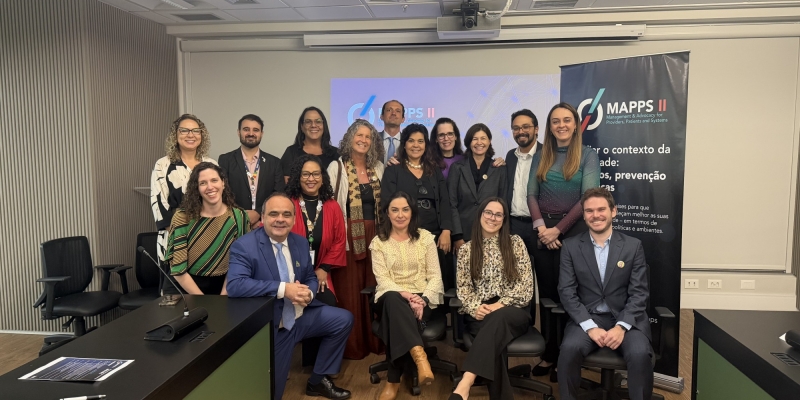
On June 11th, the World Obesity Federation convened a multi-sectoral round table in Brasilia, Brazil, with support from the Secretariat of Primary Healthcare of the Ministry of Health, Associação Brasileira para o Estudo da Obesidade (ABESO), Instituto Cordial, Vozes do Advocacy, Desiderata, Obesidade Brasil and ACT Promoção da Saúde.
The roundtable formed a central part of Brazil’s deep dive under MAPPS II (Management and Advocacy for Providers, Patients and Systems), a multi-country initiative led by the World Obesity Federation that combines research and multi-stakeholder engagement to generate country-level insight and bring stakeholders together around how obesity is addressed across systems. Brazil was selected as a ‘deep dive’ country where more in-depth, collaborative work is taking place with the support of key stakeholders in the country.
Context
In 2025, more than 1.5 million adults, 1 million children aged 5 to 9, and 1.2 million adolescents were registered with obesity in Brazil’s Food and Nutrition Surveillance System. High BMI now surpasses high blood pressure as the leading health risk factor in Brazil, accounting for over 130,000 deaths in 2023. The economic burden is also substantial: the total direct and indirect cost of overweight and obesity was estimated at US$38.7 billion in 2020 - equivalent to 2.15% of GDP - and is projected to rise sharply in the coming decades.
Obesity was first established as a public policy concern within the National Food and Nutrition Policy (PNAN) in the late 1990s, however historically the sector has emphasised adequate and healthy eating, leading to greater advances in prevention than treatment. In 2025, the Intersectoral Strategy for Obesity prevention was created, however one central challenge is moving beyond food-related determinants to incorporate other structural factors of ill health. Currently, obesity treatment is not included in the intersectoral strategy, which focuses on prevention, remaining the responsibility of the Sistema Único de Saúde (Unified Health System, SUS) in coordination with states and municipalities.
The UN General Assembly on Universal Health Coverage, scheduled for September 2027, offers a strategic opportunity to place obesity on the global agenda. At this pivotal moment, and in the context of Brazil’s increasing obesity burden, this roundtable brought together key experts to advance action on obesity in Brazil, highlighting the need for coordinated, multisectoral approaches to prevention and care.


"Obesity is one of the defining health challenges of our time, affecting over one billion people worldwide and reshaping the disease burden in every region. Brazil reflects this global picture acutely - we have seen prevalence more than double in less than two decades, and we are now facing a situation where high BMI is the leading health risk factor in the country. But Brazil also has something many countries do not: a universal public health system, a progressive nutrition policy, and a genuine political will to act. This MAPPS roundtable is about turning that foundation into coordinated, equitable action - ensuring that people living with obesity in Brazil can access the care they need and deserve, regardless of where they live or their means."
Bruno Halpern, Vice-President/President-Elect, ABESO / World Obesity Federation

Convening experts
The roundtable convened 45 representatives from the Ministry of Health, Ministry of Social Development and Assistance, Ministry of Agrarian Development and Family Agriculture, Ministry of Education, Oswaldo Cruz Foundation (Fiocruz), Pan American Health Organisation (PAHO/WHO), UNICEF Brazil, Brazilian Association for the Study of Obesity and Metabolic Syndrome (ABESO), civil society organisations, researchers, health professionals and people with lived experience of obesity, to examine current challenges and priorities for addressing obesity in Brazil.


Key themes and priorities identified
The roundtable surfaced a set of interconnected priorities that cut across individual, interpersonal, community, and systems levels, reflecting the complexity of obesity as a clinical and public health challenge in Brazil. The following themes emerged from the discussion:

Coordinating obesity action across different sectors and levels of government
A foundational theme throughout the roundtable was the urgent need to strengthen intersectoral obesity strategies and move towards a truly systemic approach. Brazil has internationally recognised policies but these have not translated into effective implementation on the ground. States and municipalities are the actors who implement policies formulated at the federal level, and without their effective involvement, guidelines do not reach the frontline.
There is a need for meaningful engagement with people living with obesity, ensuring their participation is not limited to one-off consultations and that their experiences inform the design, implementation, and monitoring of policies, research, and care pathways. It is also necessary to improve mechanisms for monitoring, and ensure the participation of states and municipalities in disseminating what is built in national forums.
“We can no longer treat obesity as an individual issue: it is a chronic, multifactorial and stigmatised disease that requires collective, cross-sectoral responses, sustainably funded within the public health system”
Fabio Trujilho, President of ABESO and FLASO and Board of Trustees member of WOF
"Brazil is a global benchmark in the fight against hunger. As a WHO-designated frontrunner country for obesity control, we have the opportunity to bring together complementary perspectives within a comprehensive and integrated approach. Rather than framing prevention and treatment as competing priorities, we should recognize them as mutually reinforcing pillars of a truly person-centered strategy, capable of reducing both the prevalence and the incidence of obesity."
Guilherme Nafalski, Instituto Cordial, Brazilian Panel on Obesity Coordinator
Read More
Strengthening the regulatory environments that support healthy living
Participants highlighted that food choices do not happen in isolation: people eat what is available in their territories, what they can access and what fits within the family budget. Whilst Brazil has demonstrated commitments to actions within the WHO Acceleration Plan to Stop Obesity, the food industry lobby is a real obstacle to the implementation of effective prevention strategies.
There is a need to accelerate progress in the regulation of food marketing (particularly marketing directed at children and adolescents) and implement fiscal measures to make healthier food more affordable. The promotion and valuing of Brazilian food cultures should be a strategy for promoting healthy eating, expanding access to healthy foods through family farming and community-based initiatives in underserved areas. Strengthening a rights-based narrative centres on sustainable food systems will also have a wider impact on food security, income generation, and environmental sustainability.
“The next step is to ensure these policies actually reach the population, expanding access to care and promoting healthier food environments and cities. For this, civil society's participation is crucial, both to boost policy improvements, incorporate the experience of people living with obesity and tackle the disproportionate influence of commercial interests that often hinder the advancement of essential regulatory measures, such as those for ultra-processed foods.”
Paula Johns, ACT Promoção da Saúde, Co-Founder and Director
Read More
Improving health system readiness and person-centred care
The historical emphasis of the sector has been on the agenda of adequate and healthy eating, and therefore advances in prevention have preceded advances in the clinical treatment of obesity. There is a lack of investment in comprehensive treatment from the outset, access to obesity training for health professionals is limited, and there is no pharmacological treatment for obesity available through the SUS.
Attendees highlighted the need to establish structured integrated obesity care pathways between primary care, specialised care and reference centres, with multi- and inter-professional teams and effective referral and counter-referral mechanisms. It is important to increase the capacity of healthcare professionals at all levels of care to prevent, diagnose and treat obesity, including by addressing weight stigma and promoting person-centred approaches to care, and ensure adequate infrastructure (facilities, furniture, and equipment).
"The patient with obesity is resilient. The health professional is resilient. And those working in advocacy are even more resilient. But the numbers keep growing and care does not appear."
Maria Edna de Melo
Read More
Addressing stigma and reframing obesity as a chronic condition
Stigma is structural, and present throughout society, affecting the prioritisation of obesity in public policy and strongly impacting treatment-seeking behaviour and experiences within health services. The SUS has made significant progress in addressing historically stigmatised conditions, but remains trapped in prejudice when it comes to obesity.
Experts called for the expansion of education and public awareness initiatives to help change public narratives around obesity, reduce prejudice and barriers to accessing care, and ultimately encourage the recognition of obesity as a chronic, complex and multifactorial condition.
“The SUS overcomes prejudice and that has results. With obesity, the SUS is stuck in prejudice”
Ericka Cuzziol, Lived Experience Advocate
Read More
Prioritising equitable access and at-risk populations, and encouraging community-level engagement
Obesity disproportionately affects socially vulnerable populations, who face inadequate access to health care and policies which are technically sound but socially unviable. Populations such as indigenous people, quilombola communities, and residents of small inland towns remain invisible in information systems and, consequently, in public policies.
It is crucial to recognise structural factors, including racism, discrimination and other forms of social exclusion, as important considerations in obesity prevention and care. There is a need to improve mechanisms to collect population data to identify at-risk populations and support local planning, using territorial diagnoses to identify local barriers and opportunities, including access to food, urban mobility, spaces for physical activity and adequacy of health service infrastructure. Participants advocated the strengthening of collaborative networks among professionals, managers, and communities as a means of sharing successful practices, reducing the isolation of frontline workers and building strategies adapted to local realities.
“Addressing obesity without tackling inequality is incomplete: populations in greater vulnerability face overlapping layers of exclusion in access to healthcare and public policies…The recommendations from this event must now be converted into concrete actions and public policies that reach those who need them most- with equity, active listening, and accountability”
Renata Couto, Desiderata, Executive Director
Read MoreWhat’s next
The findings from the Brazil roundtable will feed into wider MAPPS II evidence and publications, including global analysis, the upcoming World Obesity Atlas and the Brazil deep dive report, which will provide a deeper look into the Brazilian context.
The World Obesity Federation will continue its engagement in Brazil throughout 2026, supporting capacity-building with our SCOPE School in October, policy dialogue, and the amplification of lived experience voices.
Take part in our MAPPS II survey
Those interested in contributing can take part in surveys and register for updates via the MAPPS project page.
Take part