Nearly 70 advocates, 11 countries, one shared goal: lived experience at the heart of obesity policy
How the Obesity Lived Experience Global Summit 2026 is helping to build a global movement of advocates equipped to turn personal stories and expertise into concrete policy change.
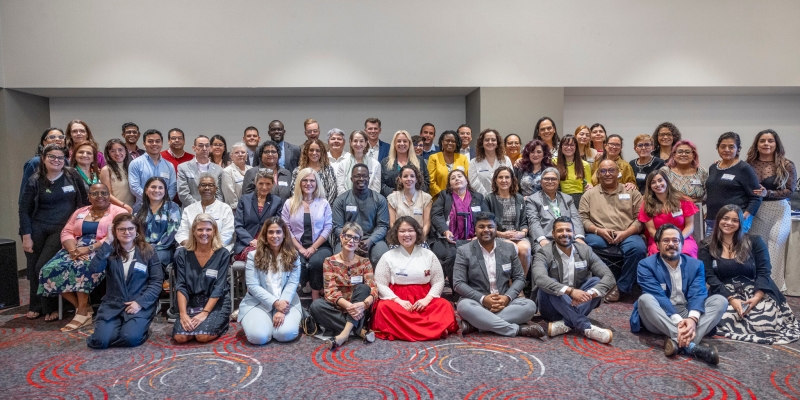
On 14 July, ahead of the International Congress on Obesity (ICO) 2026 in Mexico City, the World Obesity Federation brought together nearly 70 advocates with lived experience of obesity from 11 countries spanning Africa, Asia, Europe, Latin America, the Caribbean, North America and the Middle East for the Obesity Lived Experience Global Summit. The aim was simple to state, but ambitious in scope: to strengthen the knowledge, skills and confidence of global advocates so they can turn their own knowledge and experiences into credible evidence for policy change.
Why convene lived experience?
Over the course of the day, participants combined global evidence, policy education, peer learning and hands-on advocacy exercises. But the Summit's ambitions reach well beyond the room in Mexico City.
Each participant was registered for the full ICO Congress, which started the day after the Summit, participating as panelists, discussants and audience members, thereby fostering interaction and links across lived experience, healthcare, public health and all the other topics represented at ICO. Summit participants returned to their own countries ready to engage policymakers, healthcare professionals, researchers and civil society organisations; to amplify the voices of people living with obesity; to reduce stigma; and to champion the integration of obesity into Universal Health Coverage and other national health priorities. It's this multiplier effect - one advocate reaching many more people and institutions at home - that gives the Summit its lasting impact.
The opening session, led by World Obesity CEO Johanna Ralston and Trustee Karen Sealey, set out the case plainly: people living with obesity need to be part of every stage of health policy and decision-making, not simply consulted after the fact.
Ralston illustrated the scale of the challenge with a striking comparison - plotting the global spread of obesity prevalence against the reach of the FIFA World Cup - to underline that obesity is a genuinely global health issue requiring coordinated international action. She also shared early findings from World Obesity's MAPPS II (Management and Advocacy for Providers, Patients and Systems) survey, which has now gathered more than 1,100 lived experience responses from 58 countries, including over 1,050 people living with obesity across 56 countries and 75 caregivers representing 19 countries - one of the largest collections of lived experience perspectives on obesity ever assembled.



"Lived experience is not anecdotal - it is evidence"
The session was also candid about why this engagement doesn't happen as often as it should. Ralston and Sealey pointed to systemic barriers, using their own experiences as both patients and professionals in health to note how language, limited financial support, visa restrictions, technology gaps, and delayed or restricted access to decision-making spaces often keep people with lived experience out of the room.
These aren't accidents, they argued; they're the result of systems that haven't been designed with inclusion in mind, and health systems need to actively remove them.

The scale of the challenge
Dr Bruno Halpern, World Obesity's Incoming President, followed with a global overview of the obesity epidemic and World Obesity's policy strategy, framing lived experience as evidence in its own right, alongside - not beneath - clinical and research data. Key figures shared with participants included:
-
More than one billion people are currently living with obesity, and over a third of the world's population is living with overweight or obesity.
-
Obesity prevalence among adults has tripled since 1980, with the sharpest increases in low- and middle-income countries (LMICs) - which are now home to roughly 70% of adults and over 80% of children living with overweight or obesity.
-
Obesity is a major driver of noncommunicable diseases, including cardiovascular disease, stroke, type 2 diabetes and several cancers, contributing to millions of deaths each year.
-
Left unaddressed, obesity is projected to cost the equivalent of around 3% of global GDP by 2030 - making the case for prevention and treatment as much an economic imperative as a health one.
Dr Halpern set out how World Obesity's policy approach - global advocacy campaigns, government engagement, evidence generation and meaningful engagement of people with lived experience - works together to push for obesity's integration into Universal Health Coverage.
Personal stories, policy evidence
A highlight of the day was the panel discussion, 'From Personal Story to Policy Message', moderated by Joe Nadglowski of the Obesity Action Coalition (USA), featuring advocates Salih Hendricks (Blue Circle Voice, South Africa), Dr Kim Yoohyun (South Korea), Antonia Gama (IAPO, Brazil) and Lisa Schaffer (Obesity Canada).
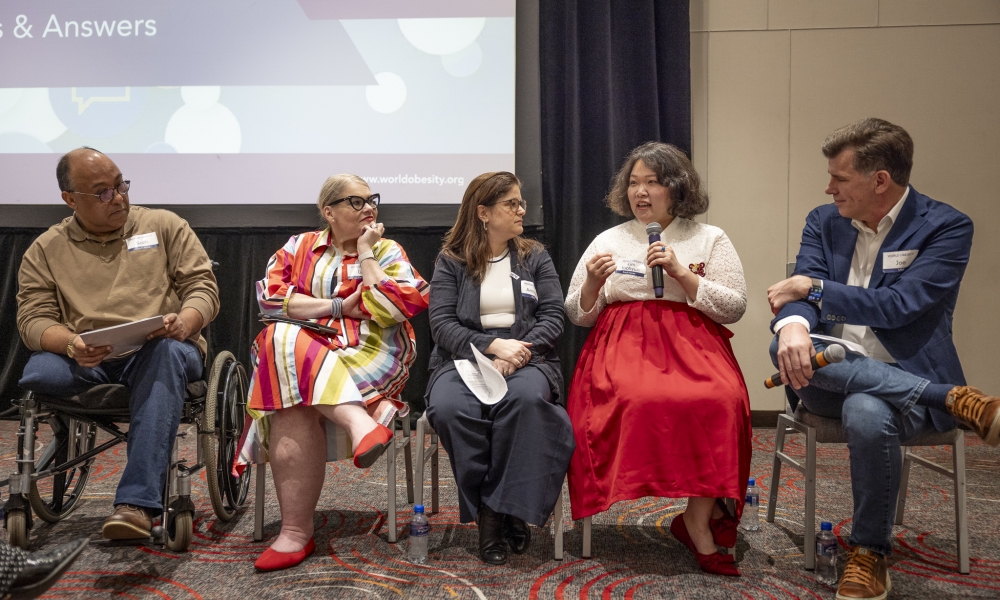
Rather than treating their stories as anecdotal, the panel demonstrated how lived experience reveals barriers that research often misses - weight stigma, fragmented care, restricted access to treatment, and the daily reality of living with obesity and related conditions.
Panellists also described concrete advocacy pathways already underway: one advocate's organisation systematically gathers evidence from lived experience to influence healthcare policy directly, while a Canadian advocate shared work developing a new declaration setting out principles for meaningful engagement of people living with obesity - aiming to ensure policies are designed with those affected, not simply for them. Obesity Canada also hosted an interactive feedback session on the declaration that afternoon.
MAPPS II and lived experience
World Obesity Head of Policy & Advocacy, Magdalena Wetzel, introduced participants to MAPPS II (Management and Advocacy for Providers, Patients and Systems), World Obesity's flagship global initiative that unites research and multi-stakeholder engagement to generate country-level insights. MAPPS II combines surveys and interviews of healthcare professionals, policymakers, caregivers and people living with obesity with national stakeholder roundtables to identify health system barriers, promote multisectoral collaboration, and generate policy recommendations - all with lived experience embedded throughout, not added at the end.
Participants also heard how lived experience advocates are already shaping conversations at the United Nations General Assembly, in national policy roundtables, in research publications, and through public awareness campaigns such as World Obesity Day.
MAPPS II

Turning stories into policy asks
Two breakout sessions gave participants the chance to put these ideas into practice.
In Breakout Session I, six groups each worked from a personal or composite story to identify the underlying healthcare barrier it revealed, work out who held the power to fix it, and develop a clear, actionable policy ask - turning personal experience into a strategic advocacy tool rather than simply a testimony.


Breakout Session II asked regional groups to translate World Obesity data into policy recommendations suited to their own health systems. The results reflected just how differently the same global challenge plays out region by region:
- Africa: Stronger food and nutrition policy to build healthier food environments.
- South-East & South Asia: Coordinated models of care integrating prevention, treatment and long-term management.
- Asia-Pacific: Greater investment in research into the underlying drivers of obesity.
- Europe: Expanded public financing and reimbursement for evidence-based obesity treatment.
- Latin America: Increased healthcare investment with dedicated funding for obesity prevention and management.
- Mexico: Recognition of obesity as a chronic disease requiring continuous, long-term care rather than episodic treatment.
- United States and Canada: Stronger patient-centred outcomes measurement to capture obesity's impact on quality of life and daily functioning.
Different priorities, but a shared destination: health systems that treat obesity as the chronic disease it is, and provide equitable, person-centred care.
A unified global voice
As the Summit closed, one message came through clearly: while advocates face different barriers in their own countries, stigma, limited treatment access and the failure of policy to recognise obesity as a chronic disease are near-universal experiences.
By exchanging experiences, building advocacy skills and developing shared policy messages, participants left Mexico City better equipped to influence decision-makers at local, national and global level.
Gatherings like this one do more than build individual confidence - they create a unified global voice, one that is essential for accelerating policy change, strengthening Universal Health Coverage, and ensuring that people living with obesity are recognised as indispensable partners in shaping more equitable, person-centred health systems, everywhere.
Get involved
Sign up now to our newsletter to receive information about future events or activities that you can get involved in.
SIGN UP