From setbacks to WHO recognition: World Obesity leaders chart the history of obesity medications
A new Personal View, led by World Obesity Federation President Dr Bruno Halpern, traces more than a century of obesity medicines. It runs from withdrawn drugs and deep-rooted stigma to the World Health Organization’s first guideline on GLP-1 therapies for obesity, and sets out what must happen next so these advances reach everyone who needs them.
The Development of Obesity Pharmacotherapy: From Early Challenges and Setbacks to Recognition by the World Health Organization was published on 14 October 2026 in The Lancet Diabetes & Endocrinology. It brings together some of the most experienced voices in the field. Alongside Dr Halpern, the authors are two former World Obesity Presidents, Professor Louise Baur and Dr Donna Ryan; World Obesity CEO Johanna Ralston; Dr Angela Jackson-Morris of World Obesity; and Professor Matthias Blüher of the University of Leipzig.

A long and winding road
Obesity is a chronic, progressive disease that affects more than one billion people worldwide, and it is growing fastest in low- and middle-income countries. Yet for most of the last century, the authors argue, a persistent misunderstanding held back efforts to develop effective medicines. Obesity was seen as a short-term problem of individual behaviour that a few months of treatment could “cure”.
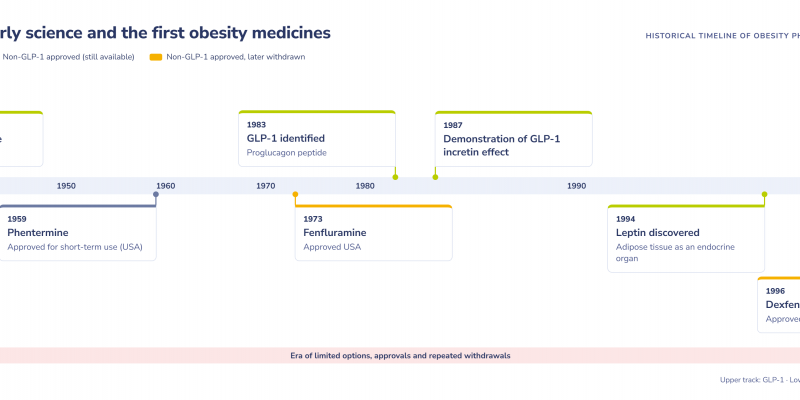
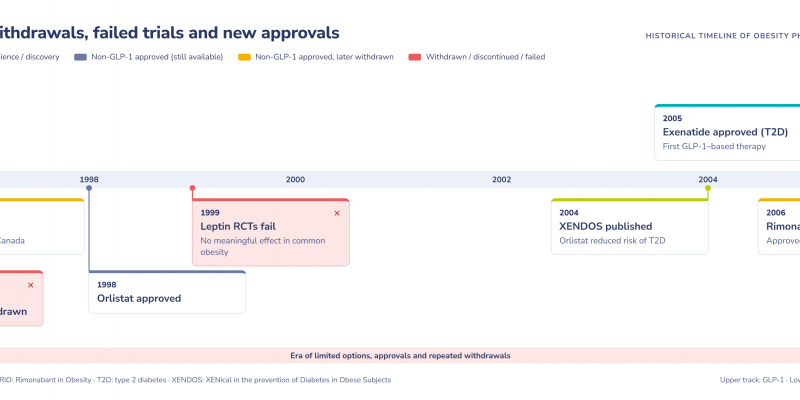
That view shaped decades of drug development. Early medications were tested in short studies and labelled for short-term use, and safety was often given too little weight. The result was a repeating pattern of early promise followed by serious setbacks:
- thermogenic drugs with severe side effects
- fenfluramine-based treatments withdrawn in the 1990s because of heart valve disease
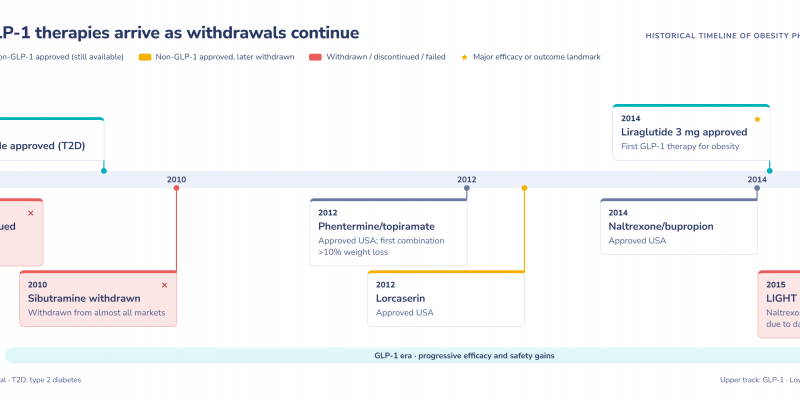
- sibutramine and rimonabant withdrawn around 2010
By the end of that decade, confidence in obesity medications was low. Few pharmaceutical companies were willing to invest, and the public assumed any obesity drug was likely to be dangerous. The authors point to a stark contrast: some data suggest that only around 1% of people living with obesity used medication, compared with more than 80% of people living with type 2 diabetes.
A shift in scientific understanding
The paper shows how the science gradually caught up. The discovery of leptin in 1994 showed that fat tissue produces hormones that regulate appetite, which was clear evidence that obesity has a biological basis. Researchers came to understand that once excess body fat is gained, the body actively defends the higher weight. That makes long-term treatment essential, rather than short courses.
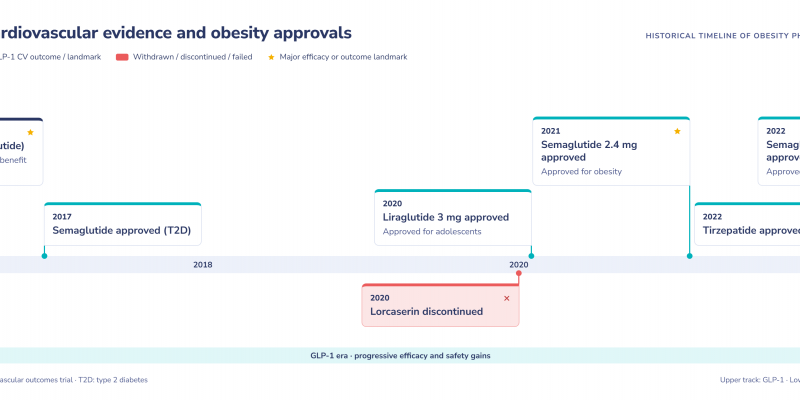
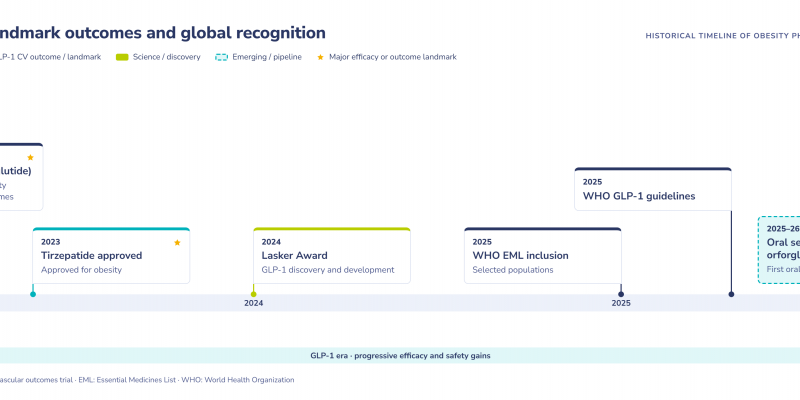
The real turning point came from incretin research, a field that goes back to 1932. GLP-1 receptor agonists were first developed for type 2 diabetes and went on to transform obesity care. Long-acting medications such as semaglutide and tirzepatide (which acts on both the GIP and GLP-1 receptors) worked far better than any earlier treatment.
More than weight loss
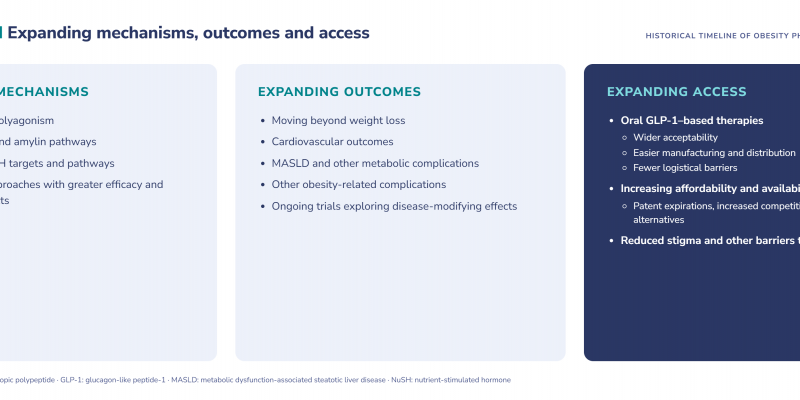
The authors stress that the most important story is health, not weight loss itself. SELECT was the first cardiovascular outcome trial in people with overweight and obesity without diabetes to show fewer major adverse cardiovascular events, with a 20% relative risk reduction. Further evidence points to benefits in:
- heart failure with preserved ejection fraction
- chronic kidney disease
- obstructive sleep apnoea
- metabolic dysfunction-associated steatohepatitis (MASH)
In the authors’ words, “weight-loss should be seen as a proxy of clinical benefits, not the outcome itself.” They also warn that media attention on weight loss and its cosmetic effects risks trivialising the real potential of these medicines to reduce the burden of chronic disease.



Recognition by the World Health Organization
The paper places two recent WHO milestones at the centre of this shift:
- September 2025: WHO added semaglutide to its Essential Medicines List, with tirzepatide, dulaglutide and liraglutide as alternatives. The listing covers people living with type 2 diabetes and obesity who also have either cardiovascular disease or chronic kidney disease.
- December 2025: WHO published its first guideline on GLP-1 therapies focused solely on obesity. It recognises obesity as a “chronic disease requiring lifetime care” and, for the first time, conditionally recommends treating it with medication.
The authors call the Essential Medicines List inclusion “an important starting point”. They also note that leaving out a medication specifically for obesity could be seen as a missed opportunity.
The road ahead
The paper is clear that major challenges remain:

High cost
The high cost of these medications risks widening inequities both between and within countries.

Limited training
Healthcare professionals still receive too little training in obesity management.

Improper use
Direct-to-consumer sales, compounded formulations and online platforms may encourage use without proper medical supervision.
Newer oral therapies may help widen access, as some do not need to be kept cold during storage and transport.
The authors also emphasise that treatment alone will not reverse the rise in obesity. As well as fair access to care, they call for much stronger prevention efforts in public policy and health systems.
They add that progress towards universal health coverage will be essential if these therapies are to deliver their full public health benefit.
Read the full paper
Read 'The development of obesity pharmacotherapy: from early challenges and setbacks to recognition by WHO', published in the Lancet Diabetes & Endocrinology.
READ MORE