2025 Year-end letter from our President and CEO
Dear colleagues, partners, and friends,
As 2025 draws to a close, we reflect on a year that has tested the global health community - and demonstrated our collective resolve to ensure obesity is finally recognised, resourced, and addressed as one of the defining public health challenges of our time.
This year, the World Obesity Federation helped shift the global conversation, bringing obesity out of the margins and placing it firmly at the centre of policy dialogues, health system planning, and international commitments. Whether through landmark policy engagement, strengthened data systems, clinical education, or lived-experience advocacy, the work of our Members has been essential in driving meaningful progress.
Changing systems, not individuals
Our 2025 World Obesity Day campaign, Changing Systems, Healthier Lives, reframed obesity not as an individual failing but as a consequence of the political, social, and commercial systems that shape our choices and environments. The campaign reached audiences in 187 countries, supported by a flagship film, regional stories from South Africa, the USA, and Trinidad & Tobago, and dozens of Member-led events.
Engagement soared across digital platforms - including nearly 6 million impressions on X, over 2 million on LinkedIn, and hundreds of thousands more across Facebook and Instagram, reflecting a global appetite for a more honest narrative: to improve lives, we must change the environments that make unhealthy outcomes inevitable. Our potential media reach exceeded 7 billion and once again World Obesity Day demonstrated that when we speak collectively, we can shift public perception and political priorities at scale.
For Half of Humanity: a global call to act
This year also marked the expansion of our For Half of Humanity campaign - a unifying advocacy effort rooted in a profound reality: by 2035, over four billion people will be living with overweight or obesity. That is half of humanity living with a disease still misunderstood, underfunded, and too often ignored in national health strategies.
Through compelling evidence, lived-experience leadership, and coordinated messaging across the UN system and civil society, we helped position obesity not only as a disease in its own right, but as an essential entry point to tackling NCDs, achieving universal health coverage, and advancing health equity. The campaign has laid the foundation for accountability in 2026 and beyond.
A pivotal year for global policy
From the Global NCD Alliance Forum in Kigali, to the UN High-Level Meeting on NCDs, to our record-setting Global Obesity Forum in New York, we ensured that obesity was no longer an afterthought in global health negotiations. Our voices - including those of people living with obesity - helped elevate obesity as a structural and political priority. Our work in food policy and childhood obesity included updated data on the Global Obesity Observatory and co-authorship on the new Lancet Ultra-Processed Food report. President Simón Barquera delivered the keynote at the Lancet launch in November, and our Policy and Prevention committee continues to support the agenda.
The year concluded with a milestone achievement: WHO’s first global guideline on the use of GLP-1 therapies for obesity care, recognising obesity as a chronic, relapsing disease requiring comprehensive, lifelong treatment. This guidance marks a historic shift - one our federation has championed for more than a decade. WHO invited the World Obesity Federation to survey Members representing both healthcare and lived experience on guidelines-related values and preferences, and two of our Trustees, Dr Karen Sealey and Ogweno Stephen, served on the Guidelines Development Group.
Strengthening care, knowledge, and accountability
Across our programme areas, 2025 delivered impact at scale:
- SCOPE continued to expand its global reach, supporting clinicians through new masterclasses, national fellowships, and accreditations. Four SCOPE schools were held in India, Chile, Brazil and China, and we reached 701 Certifications and 451 SCOPE Recertifications, making 2025 one of our best years yet. Demand for specialised obesity education grew at record pace, reflecting a clear shift toward integrated, professionalised obesity care across health systems.
- The Global Obesity Observatory was accessed more than 2.3 million times by visitors from across the world, reflecting increasing global reliance on our data, policy tracking, and analytical tools. Comprehensive updates ensured that our data were both timely and accurate, and expansions to our presentation maps and cross-national survey pages enabled users to better make international comparisons. As countries confront rising prevalence and strained health systems, the Observatory is playing a critical role in guiding evidence-based decisions and accountability.
- Our journals continued to thrive, with considerable increases in submissions observed across all four journals. Each journal expanded its scientific reach and global relevance while maintaining rigorous editorial standards, setting a benchmark in the rapidly evolving field of obesity research.
- MAPPS II gained significant momentum, moving beyond assessment toward enabling system change. Surveys - now available in 11 languages - are capturing the experiences of policymakers, clinicians, and people living with obesity, helping identify gaps in access and readiness at national, regional, and global levels. In Spain and South Africa, two roundtables brought together national experts, practitioners and lived-experience organisations, providing a platform to build evidence and exchange perspectives on obesity care and prevention. In 2026, MAPPS will expand its country engagement and activate reform coalitions, creating new opportunities for Members to shape policy and transform services.
- Our membership continued to grow in both size and influence. With 13 new Members joining in 2025, we end the year with 124 member organisations in over 125 countries and territories. Four new Trustees were also welcomed to the Board: regional representatives Sherlyn Celone-Arnold, representing North America, and Fabio Trujilho, representing FLASO, as well as Member At Large Trustee, Karen Sealey, and Clinical Care Committee Chair, Ricardo Cohen. These new additions helped drive policy wins, inform research, and strengthen advocacy from local to global levels - ensuring that the obesity community remains united, credible, and action-focused.
Together, these initiatives strengthened the global obesity ecosystem - enhancing care capacity, embedding accountability, and ensuring that obesity is recognised not as an individual failing, but as a chronic disease shaped by systems. The foundations laid this year position us for the next phase of work, where commitments become implementation and evidence drives equitable change.
Looking ahead: Beyond awareness to accountability
In 2026, we enter the second year of our Three-Year Plan, strengthening national support, advancing the WHO Acceleration Plan to Stop Obesity, expanding MAPPS II, and driving obesity into universal health coverage as a measurable obligation - not an optional aspiration.
The challenges ahead are significant: inequities in access to care are widening, unhealthy food systems continue to undermine health, and stigma remains pervasive. Yet the momentum is undeniable. The world can no longer ignore obesity - and thanks to your efforts, it no longer is.
A final word of thanks
To our Members, partners, advocates, and the thousands of people with lived experience who shape our work - thank you. Your leadership, courage, and conviction are changing how the world understands and responds to obesity.
Obesity affects half of humanity - but together, we represent something more powerful: a united movement determined to act.
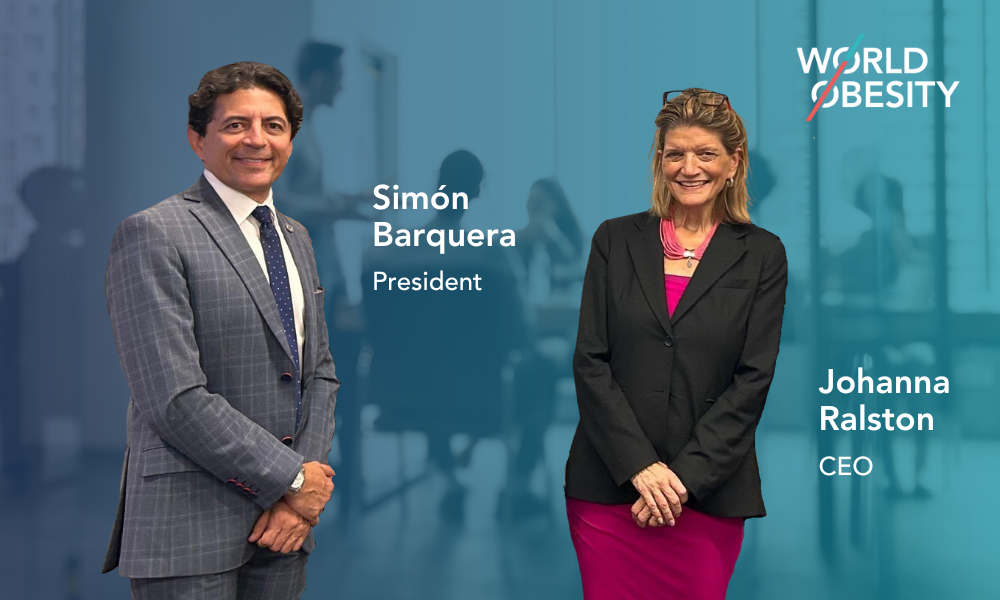
With warm wishes, Simón and Johanna
Related News
View all
News Policy & Advocacy Dec 12, 25
2025 in review: Policy & Advocacy
2025 was a critical year of global momentum and driving the conversation on obesity.
Read Post
News Data Dec 12, 25
2025 in review: Data & Evidence
In 2025, the Observatory had several key updates and the MAPPS II project was launched.
Read Post
News Member news Dec 12, 25
2025 in review: Our Members
Membership continued to grow in 2025, and we welcomed three new Trustees to our Board.
Read Post
Events News Dec 12, 25
2025 in review: Events
This year we hosted interactive, powerful events, advancing knowledge and supporting action on obesity
Read Post
News Dec 12, 25
2025 in review: Journals
In 2025, our four scientific, peer-reviewed journals continued to thrive
Read Post
News SCOPE Dec 12, 25
2025 in review: SCOPE
SCOPE has had an exceptional year in 2025, continuing its mission to provide world-class education in obesity management
Read Post