2025 in review: Policy & Advocacy
This year marked a turning point for global action on obesity.
Throughout 2025, World Obesity worked across multilateral, regional and national arenas to ensure obesity remained at the centre of global health and development debates. From major UN processes to regional coalitions and lived-experience leadership, the organisation helped strengthen partnerships and drive a unified call for multisectoral action.
Setting the stage: From Kigali to Geneva
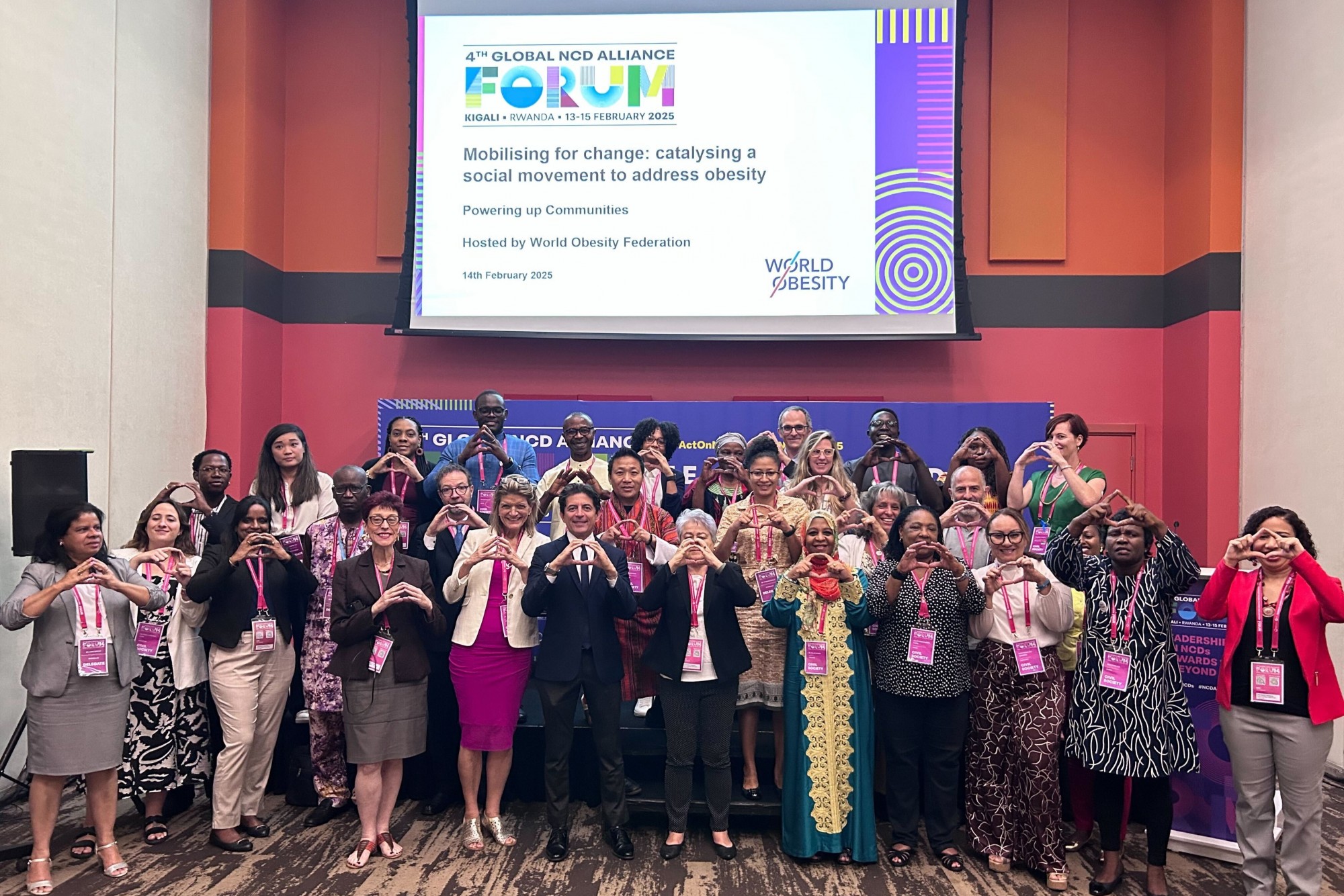
World Obesity began the year at the Global NCD Alliance Forum in Kigali, co-hosting sessions that elevated obesity within broader NCD discussions. Conversations focused on multisectoral action, financing gaps and the double burden of malnutrition in urban LMICs, while emphasising the meaningful involvement of people with lived experience. At World Obesity’s booth, advocates shared priorities for governments ahead of the High-Level Meeting - calling for root-cause action, integrated policies and full implementation of WHO recommendations.
At the 78th World Health Assembly (WHA78), in Geneva, we reinforced the centrality of obesity within global NCD responses. Through statements, bilateral meetings and public events, we highlighted the double benefits of fiscal policy, strong food environments and primary healthcare integration.
A highlight was our event 'The Right(s) Approach: Driving Action on Obesity and NCDs,' which brought together lived-experience advocates, UN agencies, governments, and civil society to explore rights-based approaches to obesity prevention and care.
read more


Accelerating Momentum Ahead of the UN High-Level Meeting on NCDs
As UN Member States negotiated the Political Declaration that will guide global action on noncommunicable diseases over the next several years, World Obesity underscored that progress would be impossible without urgent action on obesity. With more than one billion people already affected - and projections reaching up to four billion by 2035 for overweight and obesity - we called for coordinated multisectoral action rooted in primary healthcare and structural change.
To support this call, we launched the global For Half of Humanity: Four Billion Reasons We Need Action on Obesity campaign. The campaign highlighted the economic and social costs of inaction, emphasised proven solutions such as WHO Best Buys and emerging pharmacological therapies, and called for a shift from individual responsibility narratives to systemic accountability. Read our pieces in BMJ Opinion and The Lancet Global Health Comment, and insightful blog posts from our Members in Cameroon, the Caribbean, and Lived Experience advocate, Stephen Ogweno.
Converging Global Leadership: The 2025 Global Obesity Forum
A major milestone of the year was the Global Obesity Forum (GOF) in New York, co-hosted with WHO and UNICEF ahead of the UN High-Level Meeting at UNGA 80. Bringing together ministers, UN leaders, researchers, youth and lived experience advocates, the Forum created a rare space for multisectoral dialogue and shared purpose. Demand exceeded capacity, underscoring the growing political momentum for coordinated global action on obesity.


Speakers included Dr Simón Barquera, Dr Joan Matji, Sir Jeremy Farrar, Pau Gasol, and government representatives from Egypt, Greece, the Philippines and Mexico - each highlighting both the urgency of the crisis and the leadership already emerging across countries. Their contributions reinforced the theme of moving “from urgency to unity,” rooted in justice, equity, and lived experience.
Across plenaries and interactive table discussions, participants called for practical, whole-of-society solutions: strengthening food systems, embedding obesity into UHC, scaling fiscal and regulatory measures, reframing obesity as a chronic disease, and ensuring stigma-free, people-centred care. The Forum set a unified tone for the political week to come, offering a roadmap for collaboration that will guide work into 2026 and beyond.
read more
Lived Experience at the centre: From Málaga to the UN stage
Lived experience shaped World Obesity’s advocacy throughout the year. The journey began at ECO 2025 in Málaga, where advocates took part in dedicated training to strengthen their role in policy dialogue, framing, and systems-level change. This foundation carried into WHA78, where lived-experience voices joined our delegation in Geneva, helping ground discussions on equity, stigma and structural determinants.
Their leadership took centre stage during the High-Level Meeting week in New York. At the Global Obesity Forum, lived-experience advocates helped steer conversations - with Ogweno Stephen moderating ministerial panels and contributing to the Forum’s call to move from urgency to unity. Their presence across UNGA events reframed obesity as a chronic disease and an equity challenge, emphasising that lived experience is not anecdote but evidence, and that meaningful progress demands person-centred, multisectoral action.
This year’s arc - from Málaga to Geneva to New York - demonstrated that people with lived experience are not just participants but co-leaders in shaping global obesity responses, ensuring policy is anchored in dignity, rights and real-world realities.
National Action and Local Leadership
Momentum around national-level responses to obesity was further strengthened through World Obesity's co-hosting of the UN Inter-Agency Task Force Awards Ceremony in New York. The awards recognised government and civil society efforts advancing innovative, people-centred approaches to obesity and NCD prevention - demonstrating that meaningful progress depends as much on national leadership as on global commitment.
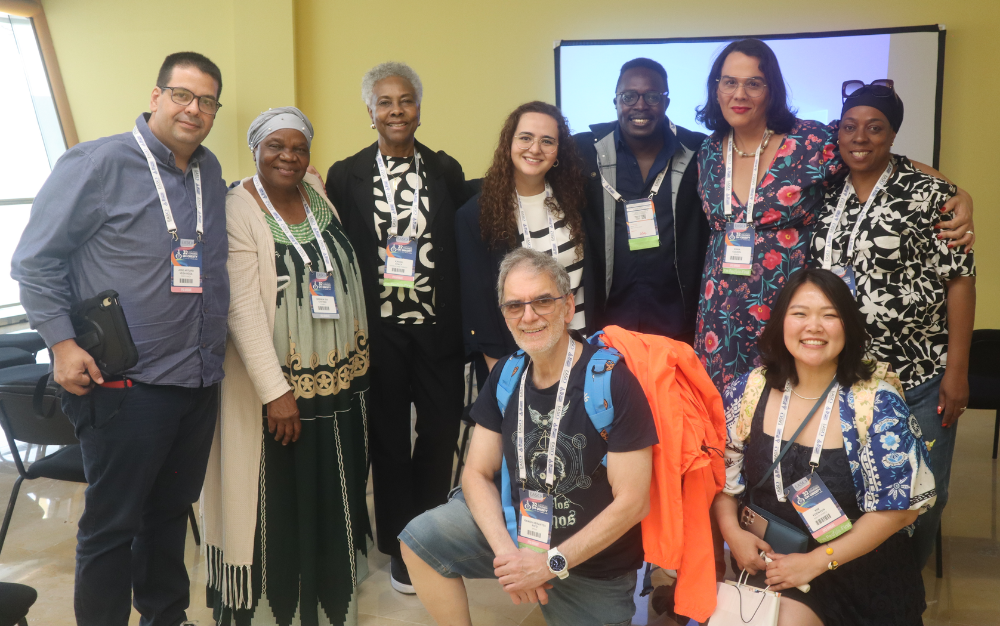
Our support for national action continued through regional and country-level engagement. At the WHO Regional Committee for Africa (RC75), we amplified calls from African Member Associations for integrating obesity prevention and care into national health systems - with lived-experience advocates and Members Brenda Chitindi and Ogweno Stephen contributing directly to this effort, helping ensure community realities shaped regional priorities.
At the same time, we advanced multisectoral, whole-of-society approaches through the MAPPS II Roundtables in South Africa and Spain, which convened governments, civil society and technical partners to explore coherent national strategies on obesity and NCDs. These dialogues created a two-way exchange between national realities and global policymaking - ensuring that insights from MAPPS II informed our multilateral advocacy, while global evidence and framing supported national partners’ work on the ground.


_800_800_s_c1.png)
Advancing Evidence and Policy Leadership
World Obesity continued to strengthen the evidence base for action on obesity, contributing to key global publications and working alongside partners across the wider NCD community. This included inputs to WHO’s multisectoral governance briefs and World Obesity’s own Investing in Action on Obesity: Catalysing the Double Dividend which highlights the economic value of comprehensive obesity strategies.
We also helped advance the broader NCD agenda through collaboration with the cardiovascular and liver communities. This included contributions to the World Heart Report 2025: Obesity and Cardiovascular Disease, which this year incorporated a strengthened focus on obesity, as well as a guest blog on obesity and liver health highlighting the shared determinants and opportunities for aligned advocacy across NCDs. These cross-sector efforts reinforced the message that addressing obesity is essential to progress across the full spectrum of noncommunicable diseases.
_1000_600_s_c1.png)
Growing well: Evidence and action on childhood obesity
World Obesity and UNICEF co-hosted a thought-provoking webinar that debated effective approaches to childhood obesity, featuring real-world examples of successful strategies.
Speakers included Member States, researchers, PLWO advocates and civil society representatives.
watch hereLooking Ahead
As global attention turns to the 2027 UN High-Level Meeting on Universal Health Coverage, we will focus on ensuring obesity is fully integrated into UHC agendas - championing lived-experience leadership, strengthening national implementation through MAPPS II, and advancing person-centred, stigma-free care within health systems. With WHO’s landmark GLP-1 guidelines marking a new chapter in treatment and equity conversations, we will continue working with governments and partners to turn evidence into action for a fairer, healthier future.
Related News
View all
News Dec 12, 25
2025 Year-end letter from our President and CEO
Our President, Simón Barquera, and CEO, Johanna Ralston, reflect on a year full of events and milestones in obesity.
Read Post
Events News Dec 12, 25
2025 in review: Events
This year we hosted interactive, powerful events, advancing knowledge and supporting action on obesity
Read Post
News Member news Dec 12, 25
2025 in review: Our Members
Membership continued to grow in 2025, and we welcomed three new Trustees to our Board.
Read Post
News SCOPE Dec 12, 25
2025 in review: SCOPE
SCOPE has had an exceptional year in 2025, continuing its mission to provide world-class education in obesity management
Read Post
News Dec 12, 25
2025 in review: Journals
In 2025, our four scientific, peer-reviewed journals continued to thrive
Read Post
News Data Dec 12, 25
2025 in review: Data & Evidence
In 2025, the Observatory had several key updates and the MAPPS II project was launched.
Read Post